
2025 At a Glance
Program Youth Scholars:
115
Advanced to the Next Grade:
98%
The plan behind our success:
In 2008, the program was created as a scholarship program for junior high and high school so that talented students from rural and urban areas would have the opportunity to continue their education.
In 2009, the Youth Development Program (YDP) expanded to offering workshops for students and their parents. Extracurricular activities included debate, music, and art.
Today, we have a thriving youth development program which has a pedagogical strategy with realistic and achievable organizational goals, outcomes, and indicators that guide our path on academic, professional, and personal development.
Why are we targeting education?
At CasaSito we believe education is a powerful pathway to personal, professional, and academic development. By supporting young people in their education, CasaSito goes beyond academic achievement to strengthen the skills, well-being, and relationships they need to build a better future for themselves, their families, and their communities.
Our non-traditional, comprehensive Youth Development Program combines financial aid, psychosocial support, training workshops, and extracurricular activities to help young people overcome barriers, develop their potential, and become leaders who can create lasting change.
The National Context
Net School Enrollment 2025
Percentage of children and young people enrolled at the official age for each level
Primary school — 94.9%
Middle school — 55.3%
High school — 27.5%
In Guatemala, the school enrollment rate drops sharply after primary school.
By high school, nearly three-quarters of young people of the official age are not enrolled in school, highlighting the significant challenges young people face in continuing their education.
Source: Guatemala’s National Institute of Statistics (INE), 2025.
Selection Process
Prospective new scholars must go through a rigorous application process. This includes:
-
An essay
-
Letter of recommendation
-
Conduct report from school
-
Home visit from a psychologist or social worker
-
Interview with the scholarship committee
Once a student is selected, they may remain in the program until graduation, as long as program requirements continue to be met.
Financial Support
The Youth Development Program provides partial financial aid to help young people and their families cover education-related costs.
Support is provided monthly for ten months of the academic year, with the amount varying according to the youth scholar’s educational level. Parents contribute toward the remaining costs of their child’s education.
This financial support is part of our broader approach of accompaniment throughout a scholar’s educational journeys, helping reduce financial barriers to access and continued education.
Psychosocial Support
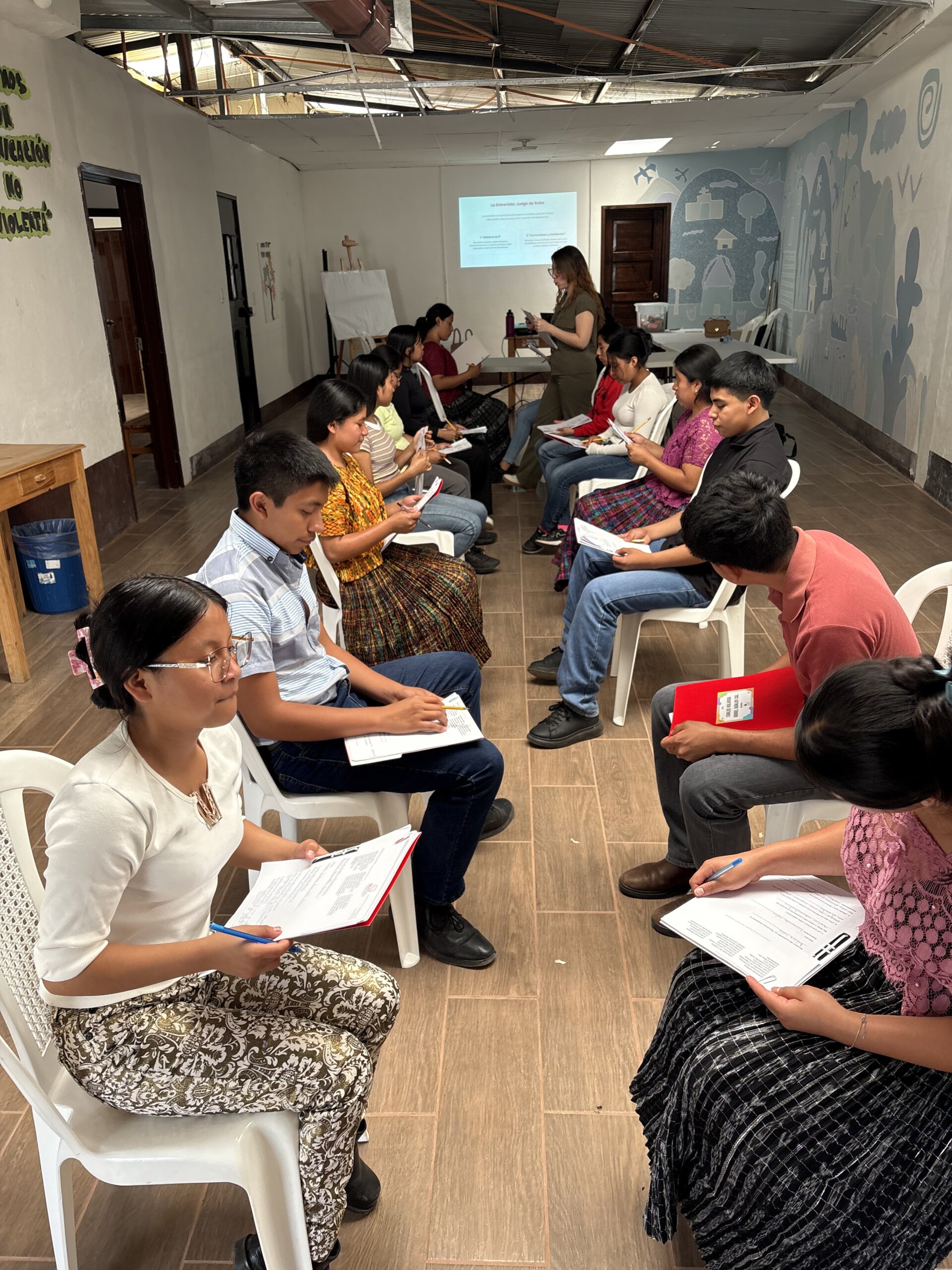
The most unique aspect of our Youth Scholars Program is the individualized psychosocial support each youth scholar receives, alongside group activities such as nonviolent communication training that strengthen their skills, well-being and relationships.
Through these activities, scholars receive support and follow-up around personal challenges, relationships, academic concerns, and emotional well-being. This support also extends to parents, helping strengthen communication and relationships at home.
Workshops
The program includes workshops for youth scholars and their families that build practical knowledge and life skills to support their education and personal development.
For scholars: Topics include self-esteem, self-care, healthy relationships, and financial literacy.
For parents: Workshops provide practical tools to support their children’s development and strengthen family relationships.
Extracurricular Activities
*DEBATE CLUB
*ART *COMPUTING
*CAREER GUIDANCE & MENTORSHIP
*ENGLISH * MATH & ACCOUNTING *SPANISH
*SPORTS CLUB *JAPANESE
“Coaching is a space where I can express everything I feel and everything I have been through. It is a place where I can share and express myself without fear of being judged. I have also learned about different topics that we discuss during coaching. I like it because it is a space where we receive individual attention and where there is follow-up with each of us.”
— Tálita, Youth Scholar
